Every summer there is art on the walls in Bayrischzell, and that has been the case for more than seventy years. 2026 was the 72nd edition, which closed on 4 September. That makes it one of the oldest exhibitions in the region. The municipality has not yet announced when the exhibition returns in 2027. As soon as the dates are fixed, you will find them here.
The 72nd exhibition ran from 8 August to 4 September 2026 at the Pfarrzentrum St. Margareth, Mühlleitenstraße 6, and has closed. The dates traditionally fall within the Bavarian summer holidays. When the exhibition opens in 2027 will be added here as soon as the municipality announces it.
How it all began
You have to picture the times. The war had been over for five years, many people in the village had lost everything in the bombed cities, and the appetite for something other than reconstruction was considerable. Out of that situation grew an exhibition that is still here today.
- 1950On 6 December a Kulturkreis, a cultural society, is founded in Bayrischzell, following the example of Schliersee. The driving force is Dr Rüdiger Sobotta, supported by Josef Reible.
- 1952The first art exhibition in Bayrischzell. Alongside it, the Kulturkreis brings scientists to the village for lectures, from physics to anthropology, and organises concerts, readings and theatre trips to Munich.
- 1953Art and folk tradition stand side by side in the town hall. The date coincides with the Gaufest, the regional gathering of traditional costume associations, so the rooms are full. Among the guests are Prince Ludwig and Princess Irmgard of Bavaria.
- 1959Artists from the Leitzach, Schlierach and Mangfall valleys join forces as the Künstlergilde Tatzlwurm, an artists' guild. The idea came from Sobotta and the painter August Riedel from Osterhofen. From now on the Kulturkreis and the guild run the exhibition together.
- 1989The municipality of Bayrischzell takes over and has been the organiser ever since.
- 2022After 18 years, Klaus Gogolin hands the running of it to Burkhard Niesel.
- 2026The 72nd edition, from 8 August to 4 September.
Artists from outside the area were welcome to exhibit from the very beginning. That made the exhibition known well beyond the district, and even city visitors who were used to a great deal were impressed by the quality.
Who shaped the early decades
Besides Sobotta there is Josef Reible, who carried much of the work in an honorary capacity, and August Riedel, who spent years working for art in the village.
The exhibition's own chronicle lists those who shaped the first two decades: Leo Samberger, Albin Grau, Max Roßbach, Karl Wendl, Helmuth Andreas Volkwein, Bert Mallad, Sepp Happ and Kurt Kyriß. Singled out there is the animal sculptor Philipp Harth, who was known far beyond the region and spent the last decades of his life in Bayrischzell.
The man at the entrance
I knew one of them myself. Bert Mallad sat at the entrance to the exhibition for years and took the admission money. As a child I sat there with him, for hours, and not just once but throughout the whole run of the exhibition.
That was down to him. He was a good storyteller, and he had a calm, friendly manner that never made a child feel in the way. He painted himself too, views of the village in watercolour. He tried to render things as realistically as he could, and it was precisely that which gave his pictures something naive. That is exactly why I liked them. Mallad, 1913 to 1995, was a painter and draughtsman who above all recorded Munich, its street scenes and the rebuilding after the war. His pictures still come up in the art trade today.
Who runs it today
The municipality of Bayrischzell took the exhibition over in 1989 and has been the organiser ever since. The cultural association Kultursprung is involved as well, and its logo appears on the exhibition poster. For eighteen years the organising lay with Klaus Gogolin, who handed it on to Burkhard Niesel in 2022. The dates traditionally fall within the Bavarian summer holidays.
A jury decides, not chance
Here is the point that sets this exhibition apart from many others: it is not first come, first served. An independent jury of three art historians reviews the submissions and selects 100 works from around 200 entries.
So every second piece does not make it in. Whatever hangs here has been through a professional selection, and you notice that as you walk through.
What there is to see
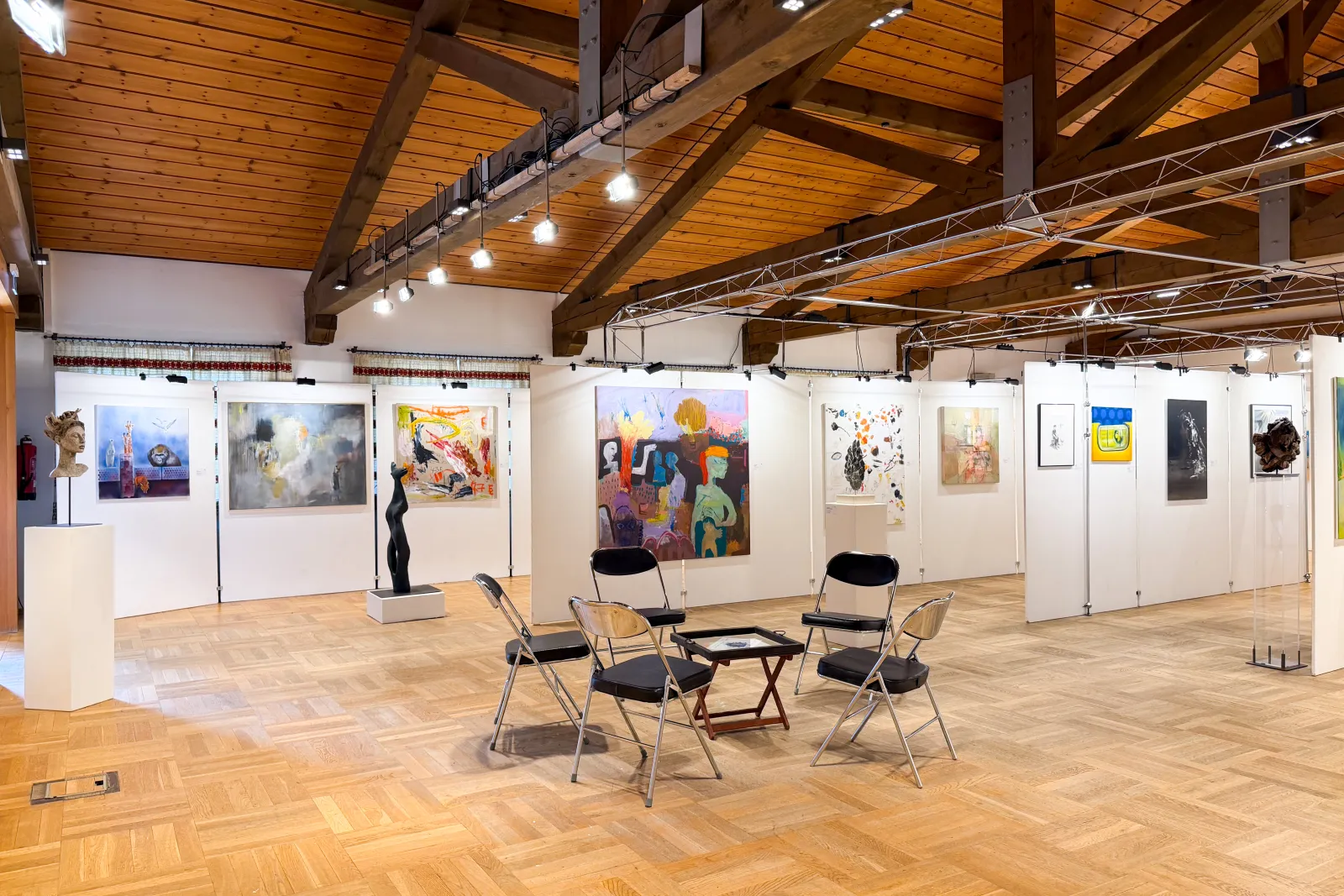
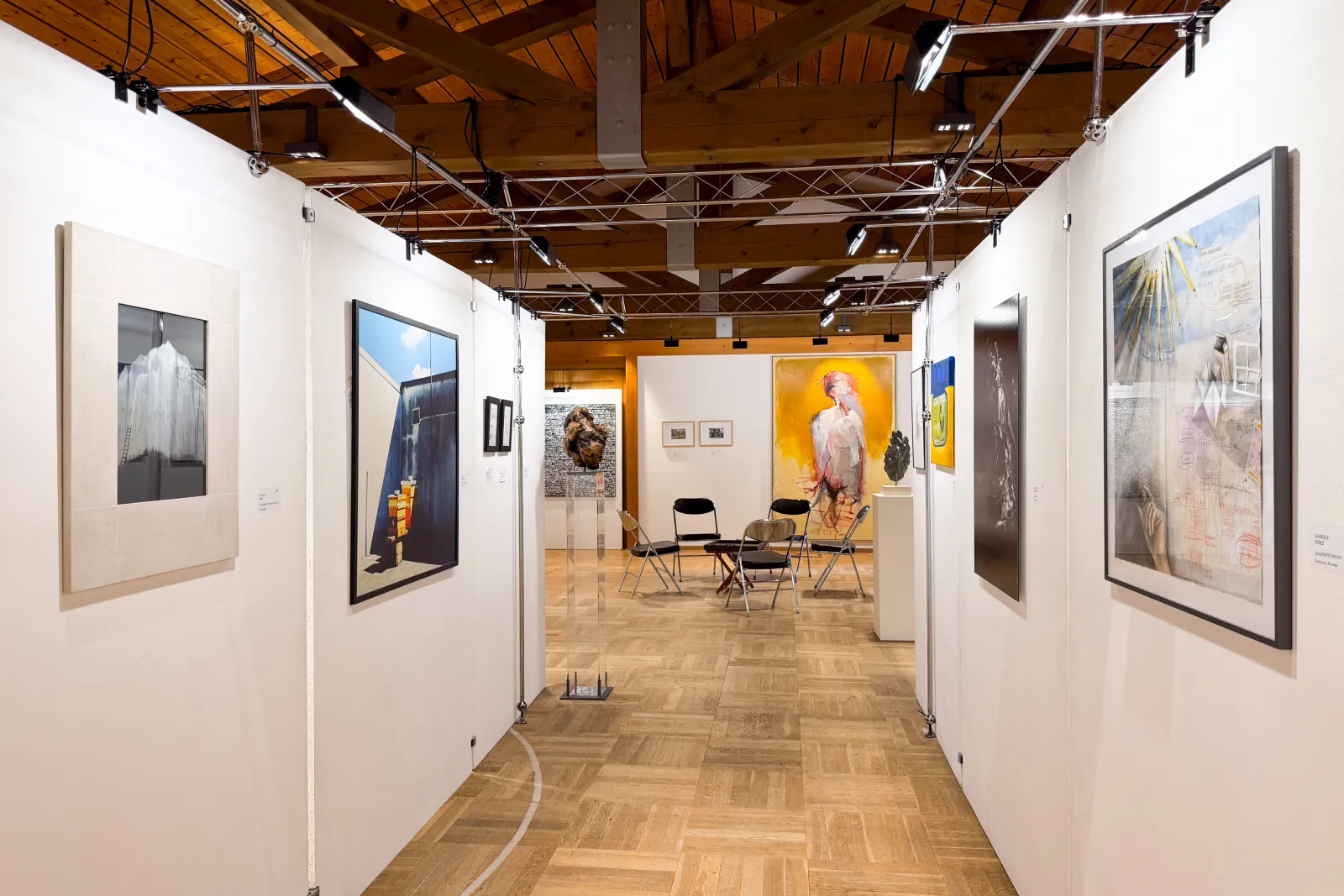
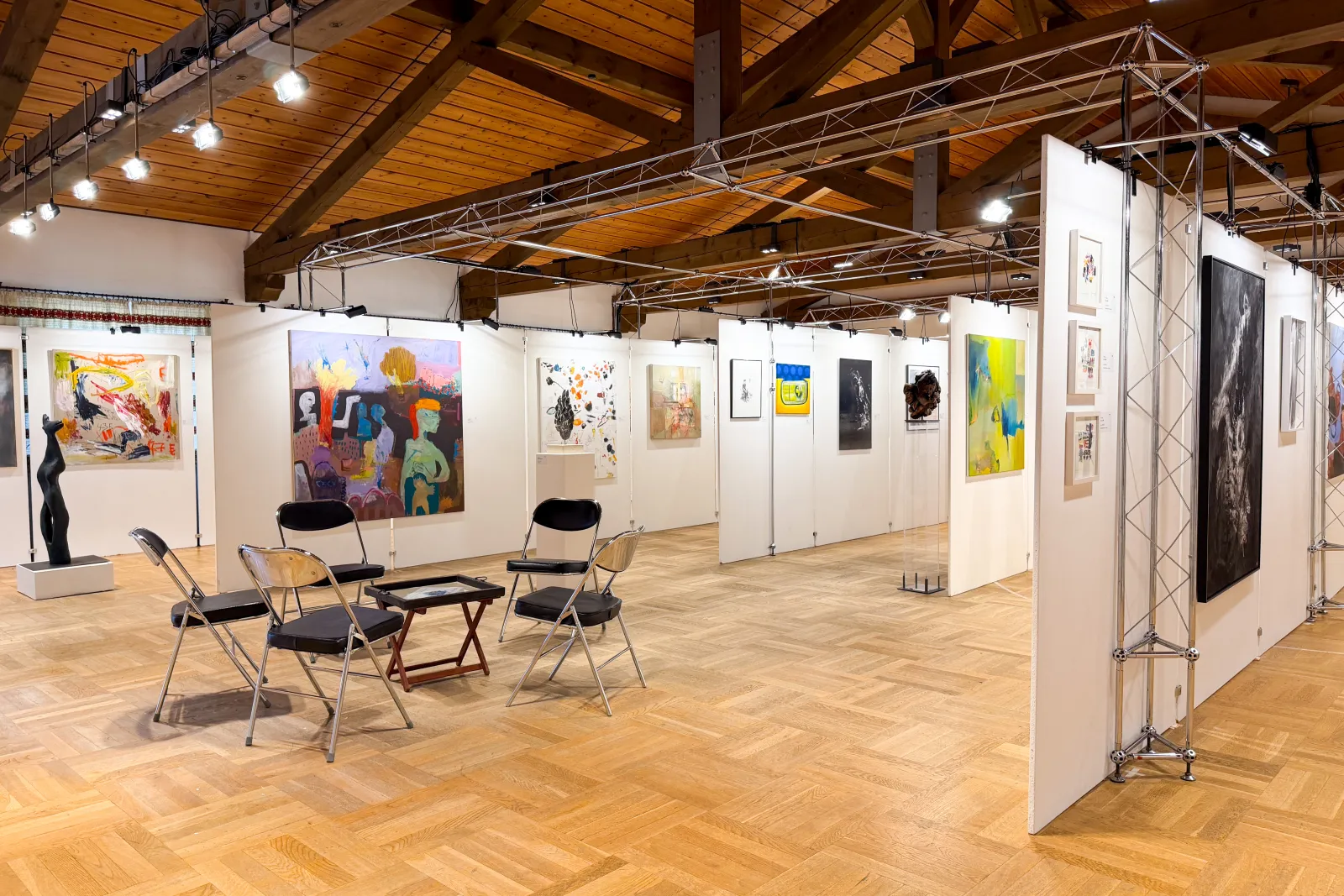
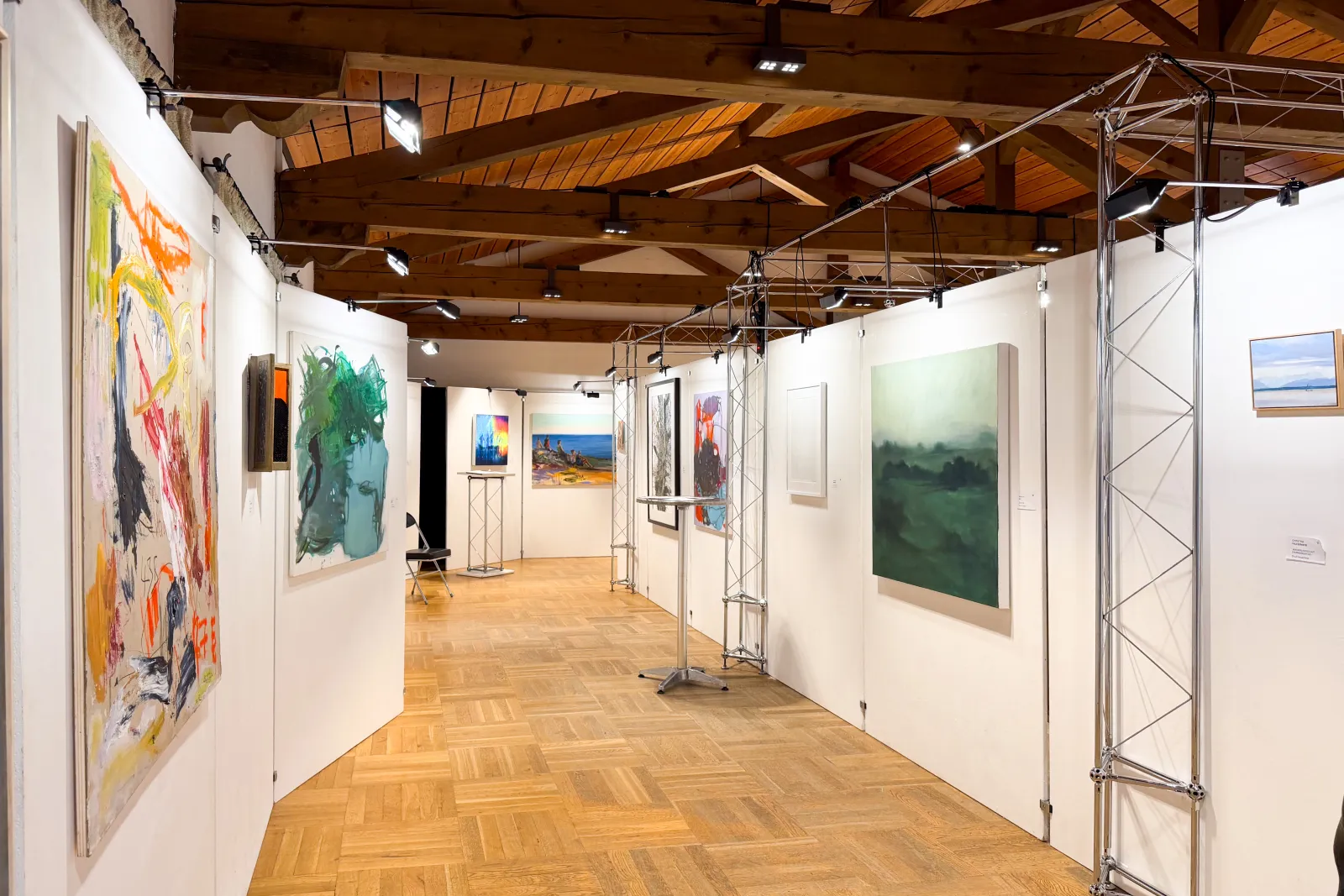
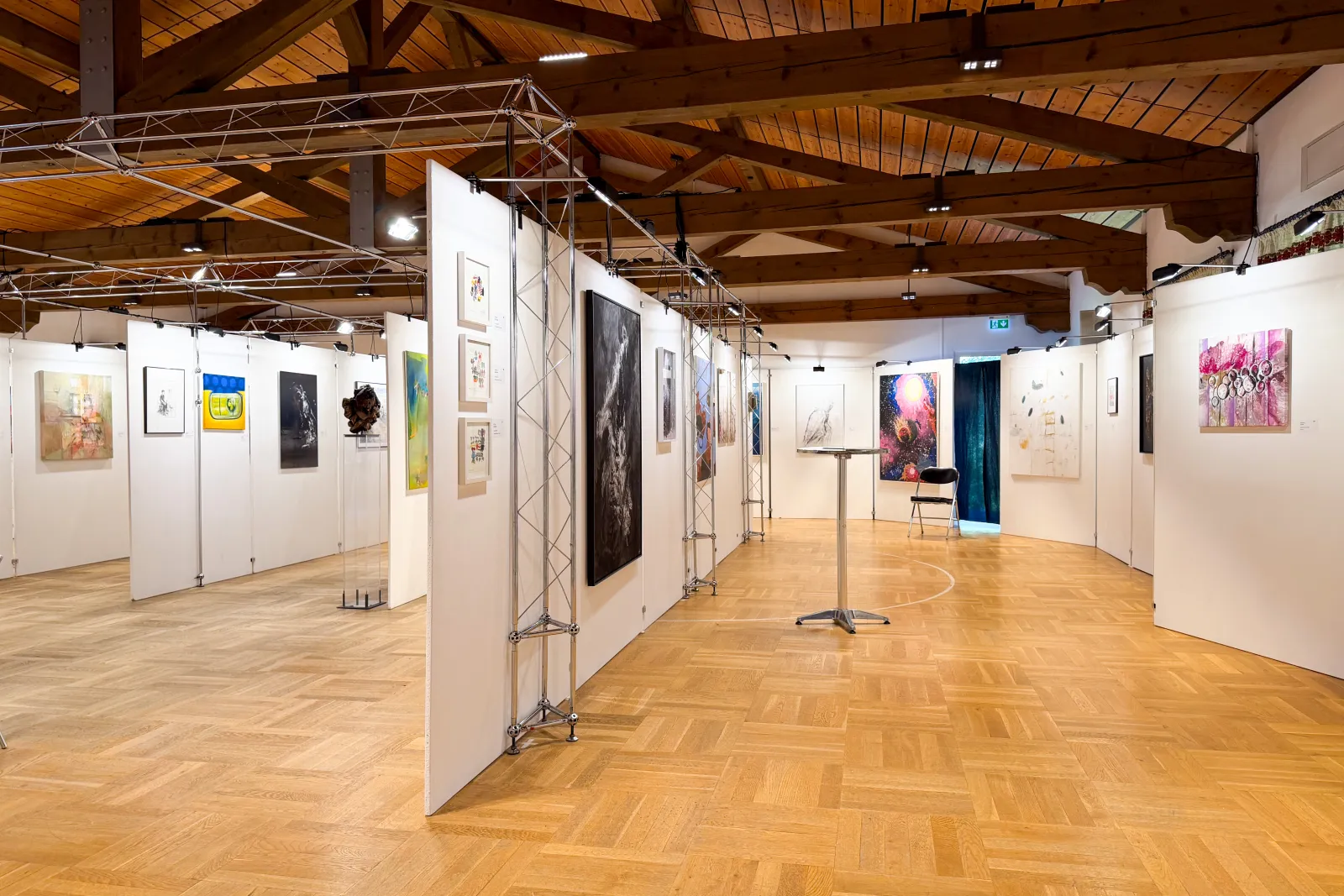
On show are works by artists from the region and from further afield, and the range is wider than you would expect of a village exhibition: painting in acrylic, watercolour and oil, graphic art, video and photographic work, sculpture in stone, bronze, wood or clay, plus collage and object art.
The rooms in the Pfarrzentrum are professionally equipped. That is not a throwaway remark, it is the reason why work of this standard can be shown here at all.
In the foyer: Countess Haziga
In 2026 there was something extra. The foyer held a special exhibition about Countess Haziga, marking the village's 950th anniversary. Access to the foyer was free, even without a ticket for the art exhibition.
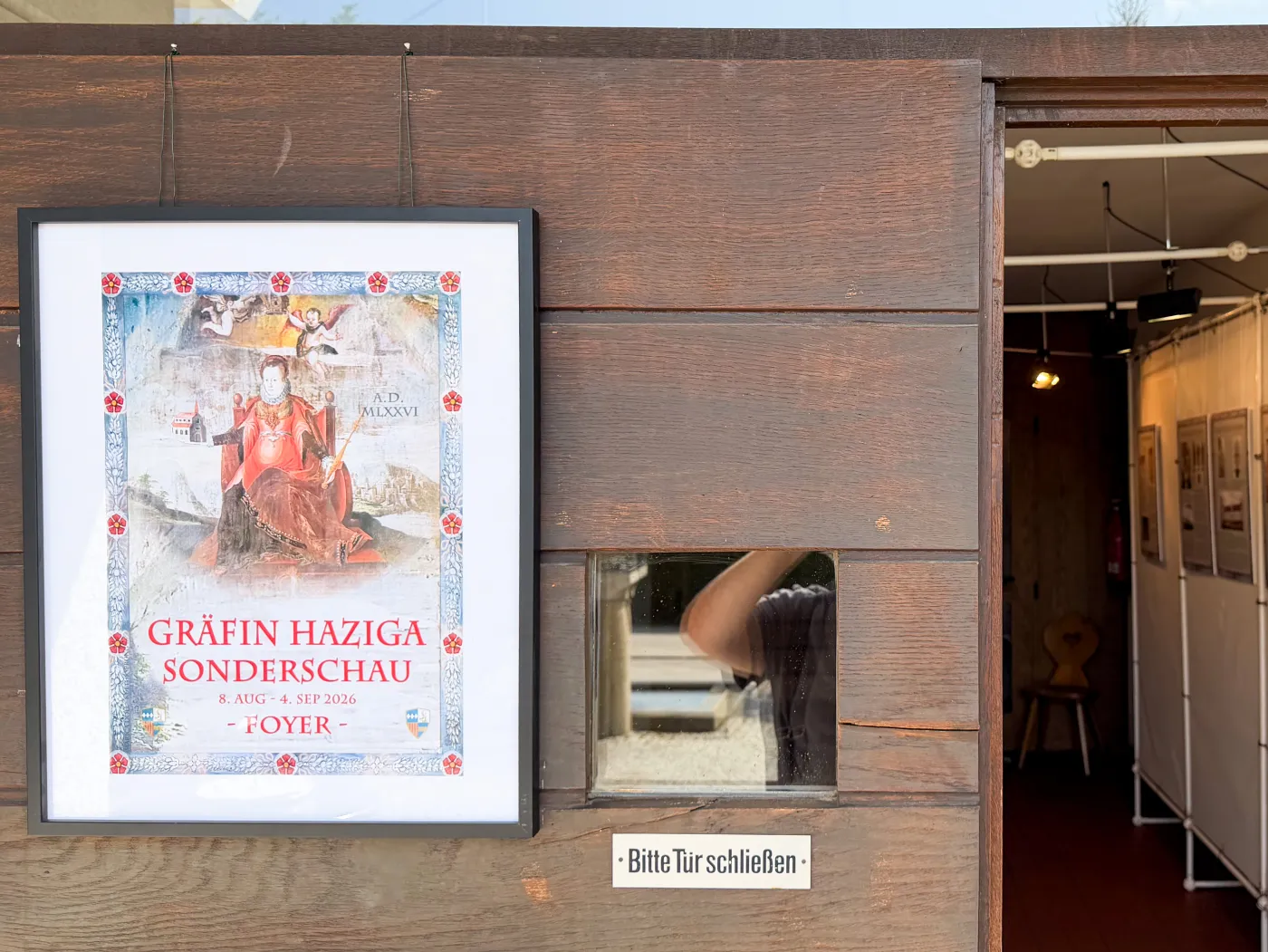
Haziga belongs to the founding story of Bayrischzell. When the hermits Otto and Adalbert built a cell with a small church here in 1076, it happened in the circle around the countess and the early Wittelsbach family. A few years later this became the monastery known as the Kloster in der Zell, which was moved to Fischbachau in 1085 and later to Scheyern. The settlement remained, and that is why Bayrischzell celebrated its 950th anniversary in 2026.
More than just looking at pictures
Alongside the exhibition itself, 2026 offered two formats that gave you more than a quiet walk through the rooms. Whether they return in 2027 is not yet known.
At Kunst und Betrachtung, art and contemplation, the artists were present in the exhibition and you could talk to them. The dates were Wednesday 12 and Wednesday 26 August, from 17:00 to 19:00. Taking part cost 6 euros, admission included.
The Art Walk under the title Almvernissage goes Tal led to the sculpture trail and to the art displayed in shop windows around the village. The meeting point was the pavilion in the Kurpark, on Thursdays from 16:00 to 18:00, among others on 13 and 27 August and on 3 September. Taking part cost 4 euros.
Practical things for your visit
The exhibition sits in the middle of the village, in the Pfarrzentrum St. Margareth on Mühlleitenstraße. You can walk there from almost any accommodation in the village, no car needed.
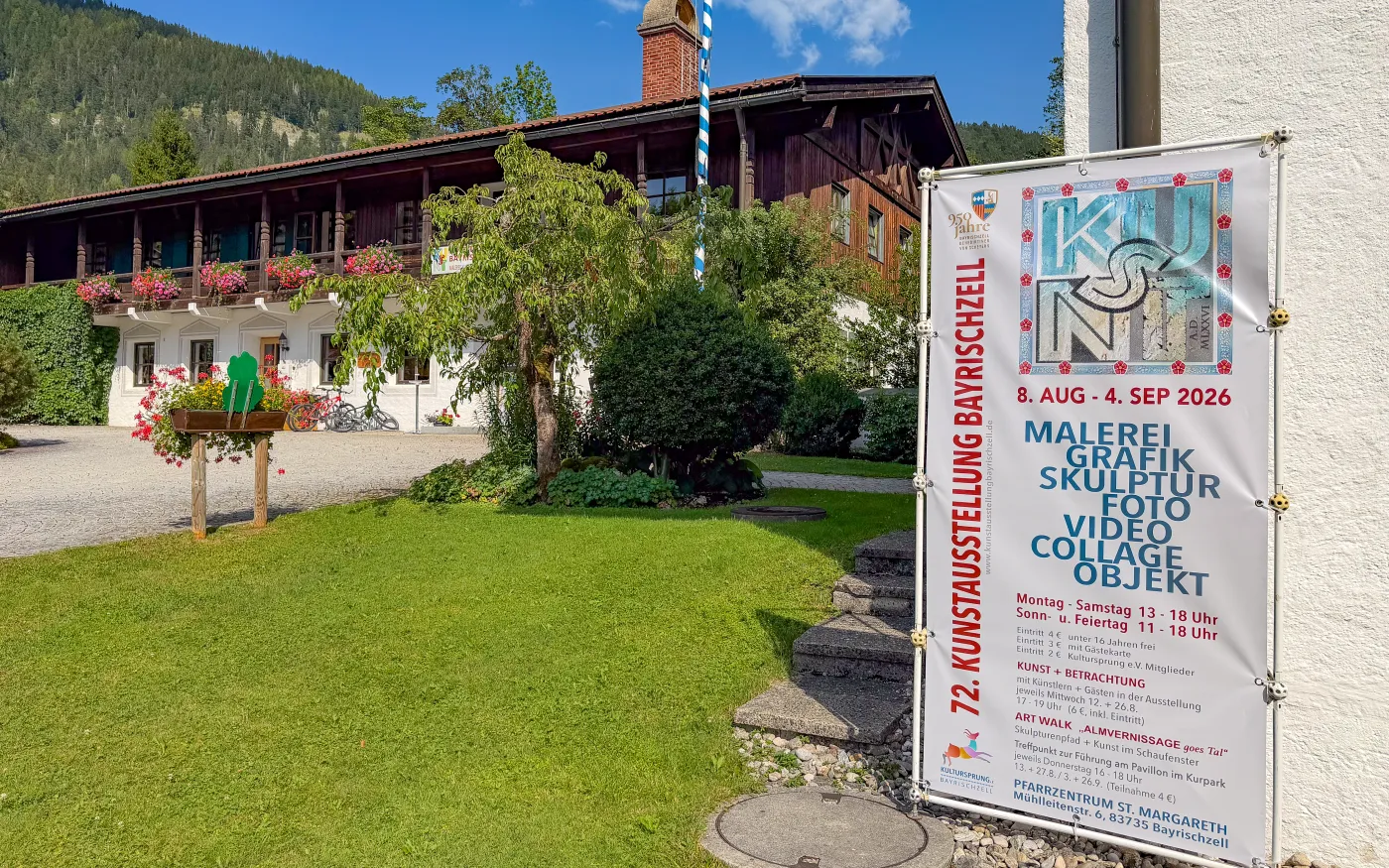
This is how it was in 2026, and the details will be updated here as soon as the key facts for 2027 are known. It was open daily: Monday to Saturday from 13:00 to 18:00, on Sundays and public holidays from 11:00. On a rainy day the exhibition is the most obvious address in the village, and on hot days the rooms make for a pleasant break.
Admission was 4 euros. Anyone under 16 got in free. With a guest card it was 3 euros, and members of Kultursprung paid 2 euros.
Beim Laden der Karte werden Daten an OpenStreetMap übertragen.
- 1Pfarrzentrum St. Margareth
Tipp: Auf einen Eintrag in der Liste oder direkt in der Karte tippen.
If you want to see more art
Besides the exhibition in the Pfarrzentrum, Bayrischzell has its Künstlerweg, an art trail: art in public space spread across the village, with QR codes at the works and background on each artist. It runs independently of the exhibition and can be walked at any time.
The historical details come from the chronicle on the art exhibition's own website, where it is told in more depth than there is room for here.